The Cyber Pivot: How to Transition into Cybersecurity After Years in IT

From Curiosity to Career
Some of my earliest memories of technology don’t come from a classroom or a job.
They come from a massive radio telescope in Puerto Rico.
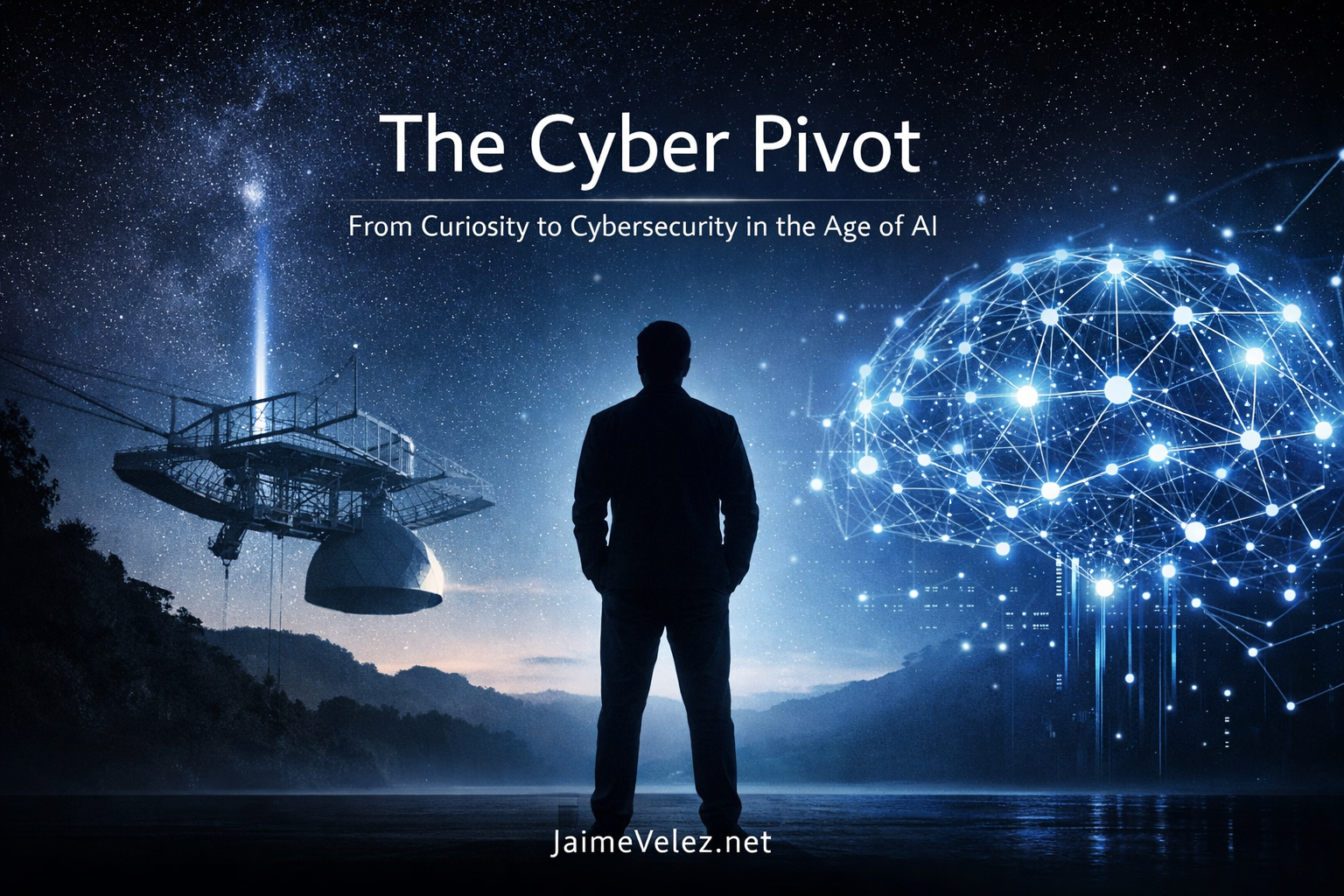
In the early 80s, my father worked at the Arecibo Observatory as the Chief Telescope Operator. Back then, I didn’t fully understand the significance of what he did. I just knew I was surrounded by machines that felt alive.
Unix systems humming in the background. Tape decks spinning. Thick cables running everywhere. And at the center of it all, a massive dish pointed toward the sky.
What fascinated me most was not just the technology. It was the purpose.
They were searching. Listening. Looking for signals that might indicate intelligence beyond our world.
Perhaps you have heard of the famous Arecibo message.
My dad was part of that system.
I didn’t have the language for it at the time, but something about that stuck with me.
The idea that technology could be used to explore the unknown. To find patterns. To uncover meaning.
Looking back now, I realize that moment planted a seed.
The Early Days of Breaking Things
At 14, my dad brought home my first computer. An Atari 800XL.
That was it for me.
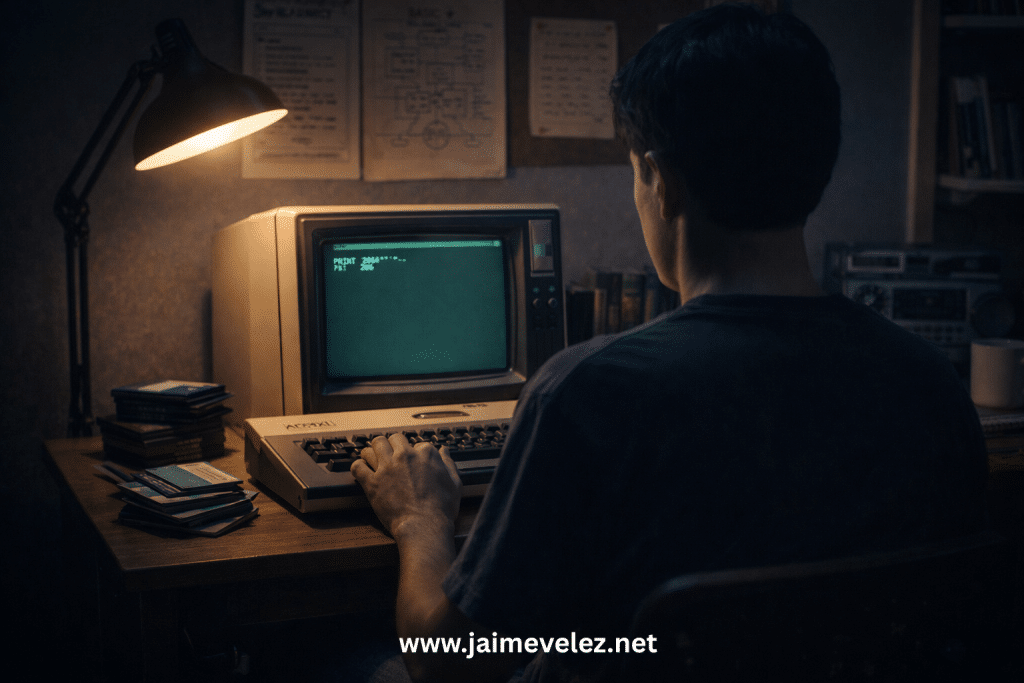
I started learning BASIC. Writing small programs. Figuring out how things worked by trial and error.
Mostly error.
In high school, I learned a lesson I will never forget. Out of pure curiosity, I typed a command on an Apple IIe system to see what it would do.
It formatted the hard drive.
Instantly.
No warning. No undo.
That moment hurt. But it taught me something important. Curiosity is powerful, but it comes with responsibility.
That lesson would come back later in ways I never expected.
College, Curiosity, and Costly Lessons
In college, I was introduced to Unix systems, Fortran 77, Pascal, and networking concepts that most people today would never recognize.
Coax cable splicing. Vampire taps. Real hands-on work.
I was fascinated by it all.
And somewhere along the way, curiosity turned into experimentation.
In 1989, I was part of a small cohort of computer science students given access to the university’s Unix system. We were all assigned the same generic password and told to change it on first login.
What most people did not know was that I had already taught myself Unix commands from a book I grabbed out of my dad’s office at the observatory.
I knew how to look up other users. Using the “who” command, I discovered that one of my professors had never logged in. His last login date was the same date his account was created.
Which meant he had probably never changed his generic password.
So I logged in as him. And changed his password.
Now here is where things went sideways.
I told a girl in my class that I was going to talk to Dr. Horn about getting her a better grade on her assignment.
That evening, someone impersonated Dr. Horn.
That decision came with consequences.
Costly ones.
That experience taught me something that would later become central to my career. Just because you can do something does not mean you should.
That is where ethics begins.
That is where cybersecurity begins.
From Campus to Combat Engineer
In 1991, I took a break from college and enlisted in the United States Army.
I became a 12 Bravo, an Army Combat Engineer.
It was a completely different world from anything I had known.
No shortcuts. No workarounds. No logging into someone else’s account to see what would happen.
The military taught me things that no classroom ever could. Teamwork under pressure. Discipline when no one is watching. And a level of grit that you cannot fake.
Those five years reshaped how I approached everything that came after.
And looking back now, there is a line that connects it all.
I went from defending my country to defending organizations against the bad actors who threaten them every day.
The mission changed. The discipline never did.
The Detour That Was Not a Detour
After college, my path was not as direct as I expected.
I moved into sales. Customer support. Technical support.
At the time, it felt like I had drifted away from the technical path I started on.
Looking back, it was one of the best things that could have happened to me.
I learned how to communicate better. How to really listen. How to understand what people actually need instead of what I thought they needed.
Those skills became my edge later on.
Because in technology, and especially in cybersecurity, the hardest problems are not always technical.
They are relational. Not transactional.
They are human.
Starting From Nothing
In 2001, after the events of 9/11 and during the dot-com downturn, I made a decision.
I started my first IT consulting company.
PcNetworkTech.com.
No safety net. No guarantees. Just a belief that I could figure it out.
That experience taught me resilience. It taught me how to operate under pressure. It taught me how to solve real problems for real clients.
It also taught me that success is rarely linear. Every skill I built during that time would eventually support my transition into cybersecurity.
Riding the SharePoint Wave
From the mid-2000s through 2016, I rode what I call the SharePoint wave.
It was a massive shift in how organizations collaborated and managed information.
In 2007, I joined Microsoft. That experience changed everything.
I traveled. Spoke at conferences. Built expertise. Established credibility.
On the outside, it looked like things were clicking.
And they were.
But there was something deeper happening.
I was learning how technology moves in waves.
And more importantly, how careers move with those waves.

The Entrepreneurial Cycles
In 2011, I left Microsoft and launched WebForce1.
Another leap.
Another set of lessons.
Some good. Some expensive.
Was it worth paying $1,500 for the .com domain? At the time, it felt like it mattered a lot more than it actually did.
Perspective changes with experience.
In 2016, I launched PingMomo. A completely different type of startup.
Again, lessons. Again, growth.
If there is one thing I have learned, it is this. You do not lose when things do not work out.
You learn.
Some of those lessons cost time. Some cost money. Some cost both.
But those lessons compound over time. And they become even more valuable when you transition into cybersecurity, where real-world experience outweighs theory.
The Shift to Cloud and the Realization That Changed Everything
In 2017, I became obsessed with cloud technologies.
Azure, specifically.
I went deep. Earned multiple certifications. Invested time and energy into understanding how this new wave was reshaping everything.
At the same time, I started focusing more on project management.
And that is where something clicked.
Adoption matters more than implementation.
You can build the most powerful system in the world. But if people do not use it, it fails.
That realization changed how I approached everything.
Technology alone is not enough.
People, process, and behavior matter just as much. That lesson became one of the biggest advantages I carried with me when I decided to transition into cybersecurity.
The Cyber Pivot
By 2022, my focus shifted fully into cybersecurity.
Even though I had been doing aspects of it throughout my career, this was different.
It became intentional.
Focused.
Strategic.
I started to see the bigger picture.
Cybersecurity is not just about tools. It is about risk. It is about trust. It is about protecting systems that organizations depend on every day.
And it is only becoming more critical.
For anyone looking to transition into cybersecurity, this is where things start to become real.
It is not about chasing a trend.
It is about understanding where value is being created.
Why I Chose to Transition into Cybersecurity
I did not wake up one day and decide to make the shift.
It was a gradual realization.
Every system I worked on had risk.
Every implementation had vulnerabilities.
Every organization struggled with balancing speed and security.
At some point, I realized that cybersecurity was not a separate field.
It was the foundation.
That is when I decided to fully move into security and make it my core focus.
If you are thinking about how to make the leap into cybersecurity, understand this.
You are not starting over.
You are building on what you already know.
Why I Write About This
I share these experiences for one reason.
To help modern professionals like you navigate career transitions with clarity, not chaos.
Not through hype.
But through a calm mindset.
Not through shortcuts.
But through real-world experience, honest reflection, and a strategic approach to growth.
If you are feeling stuck in your career…
If you know you are capable of more but need to realign where you are headed…
If you are looking for a way to grow into something that is both meaningful and financially rewarding…
That is exactly why this site exists.
What Most People Get Wrong
When people think about how to transition into cybersecurity, they often think they need to learn everything from scratch.
That is not true.
The professionals who transition most effectively are the ones who leverage their existing experience.
Project managers understand risk and coordination.
Business analysts understand processes and data.
IT professionals understand systems and infrastructure.
The key is learning how to connect those skills to security.
That is how you step into cybersecurity like a boss.
The AI Wave Is Different
Over the last few years, something has changed.
The pace of innovation has accelerated.
What used to take years now happens in months. Sometimes weeks.
And at the center of it all is AI.
Not as a buzzword, but as a force that is reshaping how systems are built, how decisions are made, and how risk is introduced.

We are now living in a brand new world where Human-AI Teamwork is becoming the norm.
Work is shifting, and soon most of us will find ourselves becoming an AI Agent Boss.
Cybersecurity is no longer just about protecting systems.
It is about understanding how intelligent systems behave.
It is about anticipating new types of threats.
It is about adapting faster than ever before.
For anyone looking to transition into cybersecurity today, this is the wave you need to pay attention to.
A Full Circle Moment
Part of what fascinated me most about the Arecibo Observatory was the mission.
My dad was part of something bigger. A system searching for signals. For intelligence beyond what we understood.
Looking back now, it is hard not to see the connection.
Back then, we were pointing telescopes outward.
Today, we are building intelligence right here.
And as we continue to transition into cybersecurity in an AI-driven world, the questions are no longer just technical.
They are philosophical. Ethical. Human.
In a strange way, it feels like things have come full circle.
From searching for intelligence to learning how to live with it.
Final Thought
My career has been about learning to navigate waves of change, knowing when to paddle hard and when to hang tight.
This is another wave.
And if you are willing to learn, adapt, and move with intention, it might just change everything for you.