The AI Learning Opportunity: The Biggest of Our Lifetime

“The capacity to learn is a gift, the ability to learn is a skill, the willingness to learn is a choice.” ~ Brian Herbert
I have spent more than three decades in business and IT, learning my way through changing tools, changing markets, and changing seasons of life.
Along the way I have discovered a simple truth. The people who continue to grow are the ones who never stop learning and who build systems that make learning a daily habit.
Today that habit is easier than ever to cultivate because we have entered an AI Learning Opportunity unlike anything the world has seen.
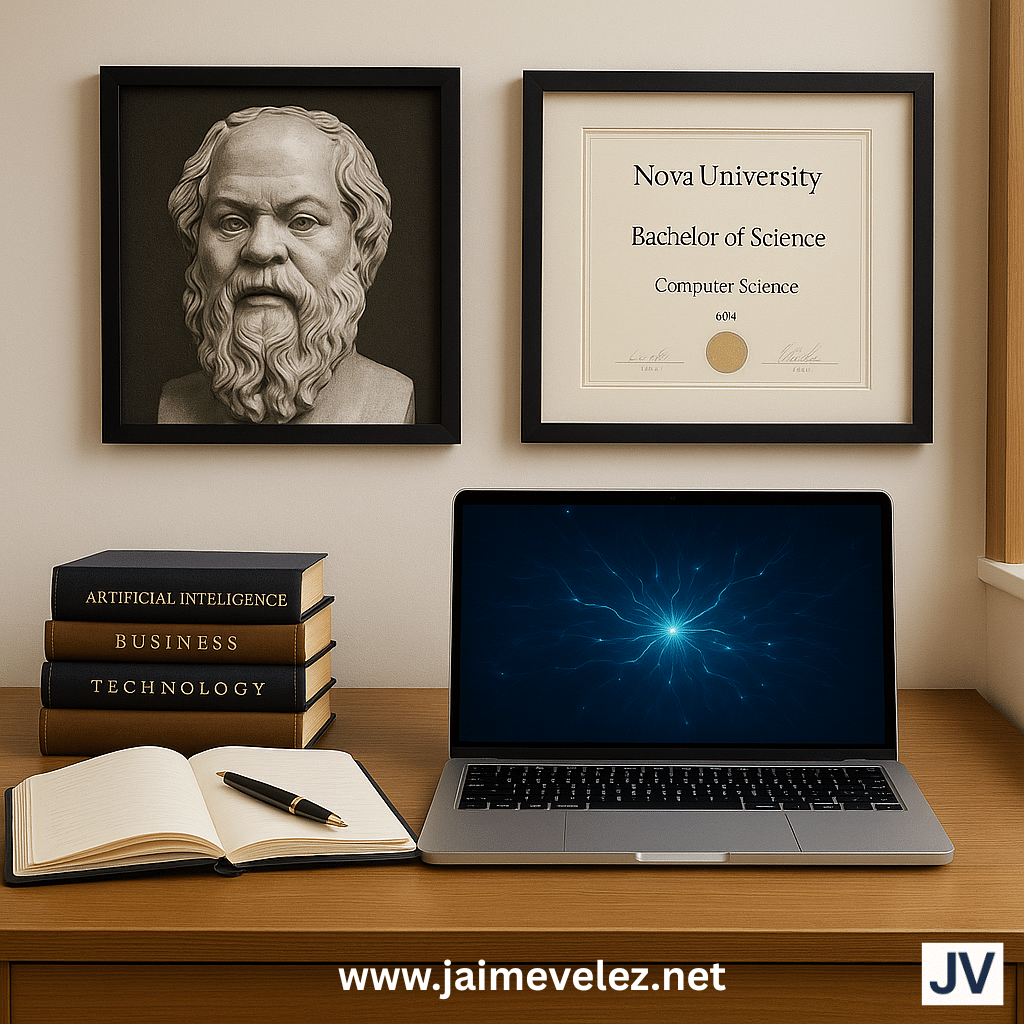
With generative AI, the gates are open. Geography matters less. Credentials matter less.
What matters is your curiosity, your consistency, and your willingness to become a builder of your own education.
This is not hype. It is a sober, practical invitation to design the way you learn, and to let Personal AI serve as your guide, tutor, and coach.
In this post I will define key learning modes, show you how to build your own curriculum with AI, and weave in my story as a Gen Xer who has been learning in and around technology since the pre-Internet days.
I will circle back to that opening quote at the end, because it captures the heart of what really matters here.
Why this moment is different
For most of history, your learning trajectory depended on access. Access to schools. Access to mentors. Access to books and trade magazines.
Even when online courses arrived, the model still felt like a digital version of the old world.
Today, generative AI lowers the barriers in three crucial ways.
- Personalization at scale. You can sit down with an AI and say, “Teach me cloud security like I am a project manager transitioning from infrastructure. I need a 30-day plan with quizzes and small projects.” In seconds you have a customized path.
- Feedback on demand. You can paste in your work, ask for critique, ask for better examples, and iterate. You get clarifications right when confusion appears, not two weeks later.
- Contextual learning while you build. You can learn inside your real work. Draft the governance memo, design the SharePoint site, build the Power Automate flow, then ask AI to review, correct, and teach you why.
This is what makes our time an AI Learning Opportunity.
The right knowledge meets you at the right time in a format you can immediately apply.
The three ingredients for modern mastery
If you want to become a genuine expert or thought leader, the recipe is simple to describe and challenging to live.
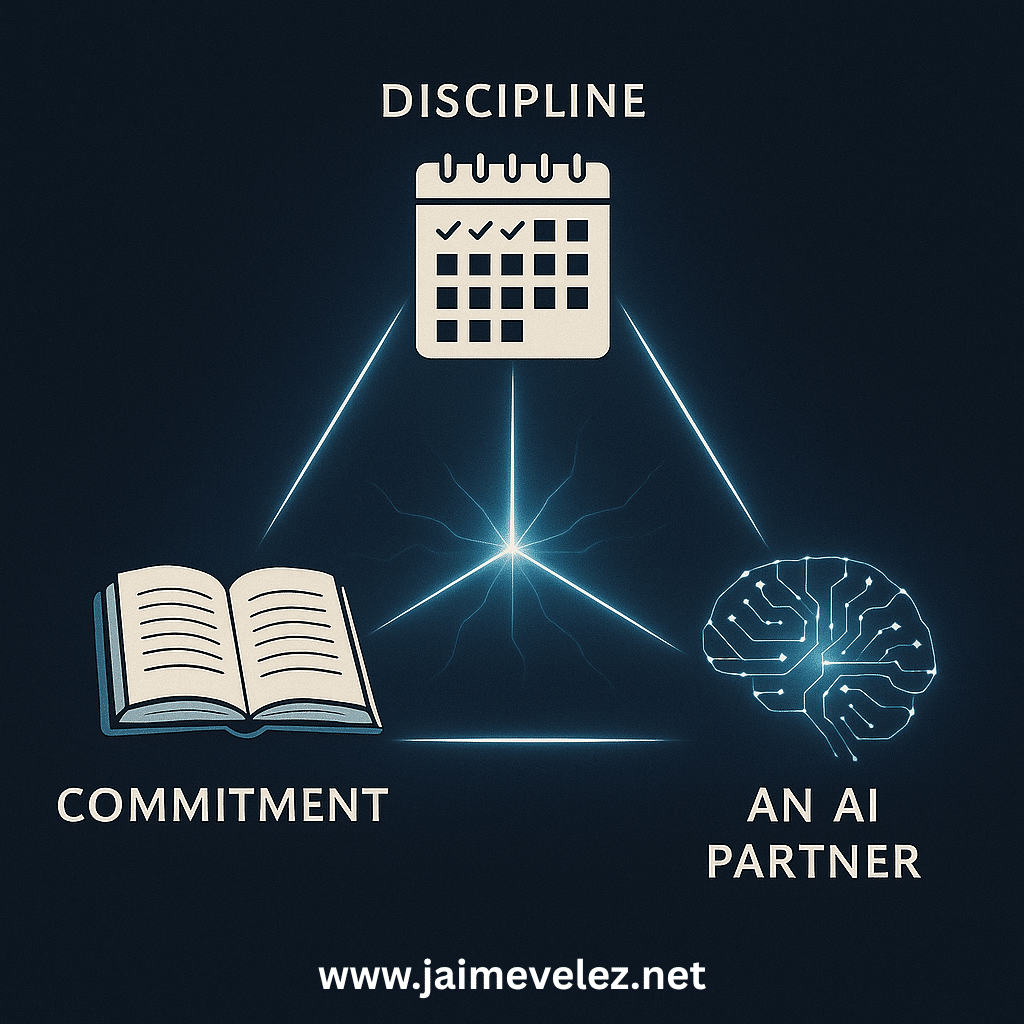
- Discipline. A predictable daily rhythm beats rare bursts of intensity. Thirty focused minutes each day will outperform a once-a-month binge.
- Commitment. Choose depth over novelty. Stay with the same core path long enough to build real skill. Ignore the noise.
- An AI partner. Treat AI as your tutor and collaborator. Ask questions. Request examples. Demand quizzes. Seek critique. Use it to design practice, not to avoid practice.
I am not suggesting that tools make mastery easy. I am saying they make mastery possible for anyone who wants it and is willing to show up.
The four learning modes and how AI amplifies each
1) Structured learning
This is the traditional model. Degrees, certifications, course sequences, bootcamps. Clear curriculum, defined milestones, external accountability. Structured paths give momentum and community.
AI can reinforce structure with summaries, flashcards, and tailored practice. Ask your AI to break a course into weekly sprints with checkpoints. Ask it to create a quiz after each module. Ask it to generate project briefs to apply the lesson.
2) Unstructured learning
This is curiosity-driven and self-directed. You follow the questions that arise from your work and life. You read articles, watch talks, try things, and talk to people. Left alone, unstructured learning can drift.
With AI, you can give your curiosity a backbone. Ask your AI to map a reading list, rank the most useful sources, and suggest a simple project to make the ideas tangible.
3) Learning on the fly
This is real time problem solving. The meeting is in two hours and you must explain the difference between OAuth and SAML. The new client needs a quick governance deck. The model changed and your automation broke. In the past you were stuck with generic web searches.
Now you have a tutor who understands context. Feed it your document and ask for improvements. Paste error logs and ask for likely root causes and the learning concepts behind the fix.
This is where the AI Learning Opportunity feels like magic because practice and theory meet in the moment you need both.
4) Reflective learning
Most people skip this. Reflection transforms activity into growth.
AI can prompt you to capture lessons learned, identify patterns, and design next steps. A weekly reflection with AI keeps your learning loop alive.
My 30-year journey, and what I learned at each stage
I want to show you how these modes showed up in my life, long before AI could help, and how they show up for me now.
Pre-Internet: University and the book era
As a Gen Xer my early learning lived inside libraries, classrooms, and the bookstore. University gave me structure and deadlines. Trade magazines and technical books gave me pathways beyond the classroom.
I learned to take notes. I learned to outline chapters. I learned to build a personal syllabus for topics I wanted but could not find in class.
Looking back, I see the instinct to self-curate. That instinct still matters. The difference now is that AI helps you curate faster and better.
The habit that changed everything
Stephen Covey, author of “The 7 Habits of Highly Effective People”, taught me the importance to “sharpen the saw.” I took that to heart. I made learning a daily habit.
Mornings became review and practice. Evenings became reading and reflection. That rhythm has been the single best investment in my career.
Tools change. Roles change. Habits scale.
Today I still sharpen the saw, only now I have an AI coach to design routines, quiz me, and keep the cadence.
This is my favorite use of our AI Learning Opportunity because it multiplies a habit that already works.
On-the-job training and bootcamps
After college, most of my learning happened at work. New projects forced new skills. Bootcamps gave me bursts of structure when I needed to level up quickly.
I learned the value of time-boxed sprints, pre-work, and practice exams.
With AI, you can build your own micro-bootcamp any time. Set a topic. Set a time window. Ask your AI to design the agenda, the exercises, and the scoring rubric.
The mid-90s: teaching A+ at PC Professor
One of the turning points in my development came when I taught an A+ computer certification class at PC Professor in South Florida.
Teaching lifted my learning to another level. The pressure of explaining concepts to students forced me to internalize the material. I could not hide behind vague understanding. I had to prepare, anticipate questions, and demonstrate real competence.
This experience shaped a rule I still follow. Do not learn only to pass a quiz. Learn so well that you can teach it.
With AI this is easier to practice. Ask your AI to play the role of a skeptical student and pepper you with questions until your explanation holds up.
The early 2000s: the CBT wave and SharePoint
In the early 2000s I consumed a lot of what we used to call Computer-Based Trainings (CBTs).
I would carve out time every week to work through modules, take notes, and then apply the lesson to a small project.
Around that time the SharePoint wave arrived and I rode it for almost fifteen years. That long ride taught me the value of staying with a platform long enough to see the deeper patterns. When you only nibble, you never see the architecture.
If I were repeating that season today, I would pair each CBT with an AI practice plan and weekly mock projects. I would ask AI to grade my work against best practices and to simulate a client review meeting.
The 2010s: YouTube plus premium learning platforms
The 2010s turned YouTube into a global classroom. The buffet was incredible, but the quality mix was all over the place. That is when I supplemented with premium platforms like Pluralsight, LinkedIn Learning, and Udemy.
I liked the structure and consistency. I learned to validate sources and to blend free and paid learning into a coherent path.
Today, AI can do the curation with you. It can help you avoid the weeds, stack the best playlists, and translate lessons into your language and domain.
This is another place where our AI Learning Opportunity shines because it helps you keep the benefits of abundance without drowning in it.
The 2020s: short-form everything
Short-form content became the norm. Nuggets of insight, quick demos, punchy explainers. These are great for discovery and reinforcement.
They are risky if you treat them as complete education.
My rule is simple. Use short-form to spark interest. Use projects and longer study to build skill.
Today, AI helps you bridge the gap. When a short video sparks curiosity, ask AI to write a longer outline, choose deeper resources, and suggest a weekend project to cement the idea.
Design your personal university with AI
Here is a practical way to turn intention into a plan.
- Name a destination. Choose a clear twelve-month aim. Examples: become an AI-savvy project manager, level up in cybersecurity governance, build a meaningful side business that serves mid-career professionals. Write it down.
- Break it into quarters. Create four thematic blocks of focus. For each block, define the skills you will practice and the project you will ship.
- Build weekly sprints. Ask your AI to turn each block into twelve weekly plans. Include a reading list, one practice drill, one small project, and one quiz.
- Learn in public. Teach what you are learning. Write a weekly post. Record a short video. Host a small workshop for your team. Teaching creates healthy pressure and makes your knowledge stick.
- Reflect and adjust. End each week with a debrief. What worked, what did not, and what you will change next week. Ask AI to analyze your notes and suggest improvements.
This approach turns the AI Learning Opportunity into something you can live. It also respects the way adults learn best, which is through purpose, practice, and reflection.
Sample AI prompts you can copy:
- “Design a 90-day learning plan to become a SharePoint governance lead. Include weekly reading, one hands-on exercise, and a Friday quiz. Keep the time commitment under five hours per week.”
- “Act as my Socratic tutor. Ask me ten questions to test my understanding of role-based access control. Make the questions practical and tied to real projects.”
- “Create a step-by-step project brief for a Power Automate workflow that tracks security review requests from intake to approval. Include criteria for success and a peer review checklist.”
- “Review this draft policy for clarity and tone. Explain every edit so I learn the principle behind it.”
- “Play the role of an executive stakeholder who is skeptical of my proposal. Ask me five tough questions and coach me on strong answers.”
Jaime’s Tip: Pair every week of study with a public artifact. A post, a short demo, a lesson for your team, a checklist that others can use. Teaching converts information into contribution.
Structured vs unstructured vs on-the-fly, in practice
Let me put all three on the same page.
- Structured: Enroll in a focused course on AI governance. Ask AI to convert the syllabus into a weekly checklist. Use AI to generate flashcards and practice questions. Schedule a mock exam every other Friday.
- Unstructured: Spend one hour each Saturday following curiosity threads. Ask AI to outline the subtopics you discover and to suggest one deeper source for each. At the end, ask for a one-paragraph synthesis and a next action.
- On-the-fly: When work throws you a curveball, use AI to learn just enough to act with confidence. Ask for the three biggest mistakes to avoid. Ask for a concise checklist. After you deliver, ask AI to write the lesson you should capture for your playbook.
These modes play well together. Rotate them based on your season and goals.
Make your learning serve your life
Learning is not a race and it is not a content binge.
Learning is a way to serve your purpose.
If you have followed my work, you know my values well. Faith, Family, Health, Simplicity, Innovation. I want my learning to reinforce those values.
That means I say yes to topics that make me more useful to the people I love and to the clients I serve. I say no to learning that pulls me away from what matters most.
Use the AI Learning Opportunity to align your learning with your long-term vision.
If your aim is time and financial freedom, focus your learning on skills that produce leverage and integrity.
If your aim is health, let learning support your habits and routines.
If your aim is impact, let learning fuel service and mentorship.
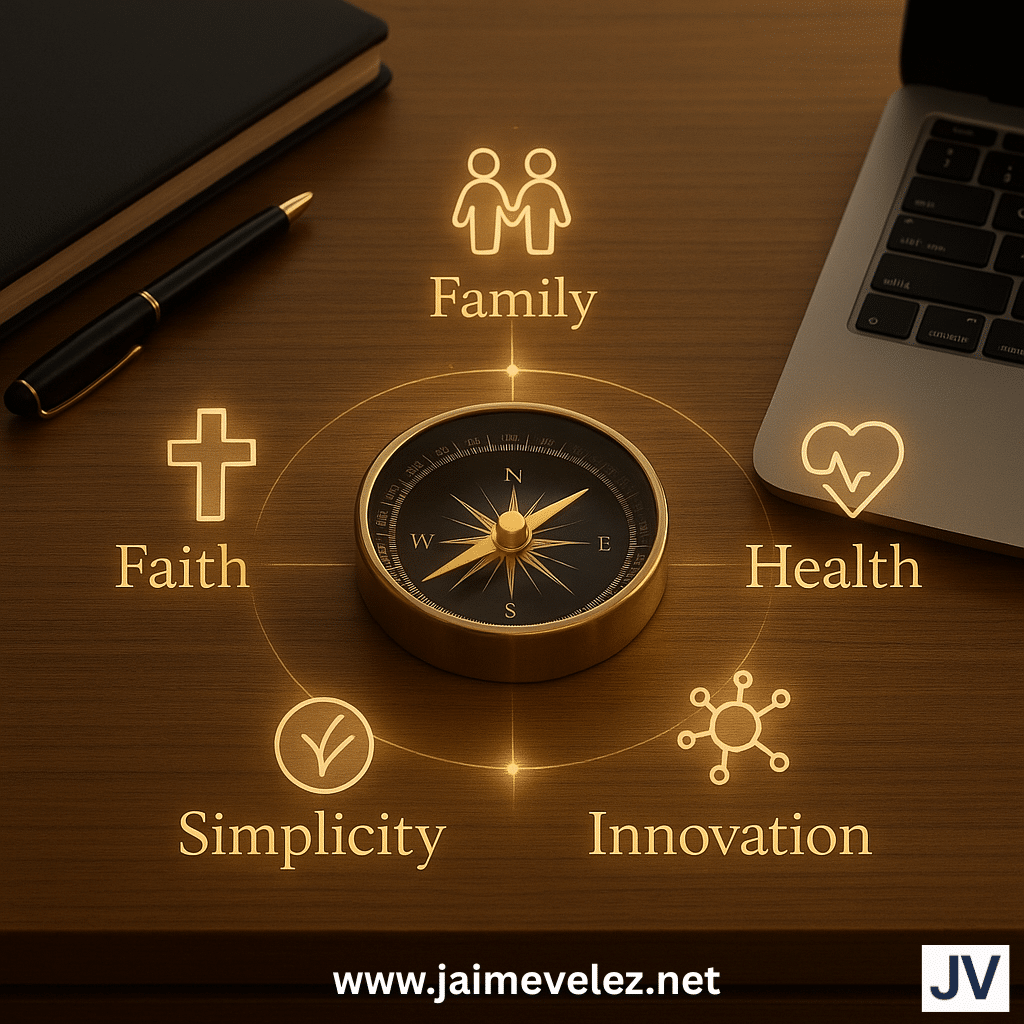
Jaime’s Tip: Start each quarter with a simple alignment check.
Ask, “How will this next block of learning strengthen my Faith, Family, and Health while simplifying my life and keeping me innovative?” If the plan does not pass that test, revise it.
Build a weekly cadence that compounds
A plan is only as good as the rhythm that sustains it. Here is a cadence that works.
Monday preview. Ask AI to summarize the week’s objectives in five bullet points. Schedule two focused sessions on your calendar.
Daily micro-sessions. Spend 25 to 45 minutes in deep study or practice. Use AI to quiz you. Use it to critique one small artifact.
Midweek checkpoint. Ask AI to evaluate your progress and suggest one adjustment for the rest of the week.
Friday demo. Ship something visible. A one-page explainer. A short Loom tour of your prototype. A diagram that clarifies a messy concept.
Weekend reflection. Paste your notes into AI. Ask it to extract lessons, identify patterns, and recommend next steps.
Consistency beats intensity. Small, reliable steps add up to meaningful skill.
Common pitfalls and how AI helps you avoid them
Information overload. Abundance can paralyze. Ask AI to curate the top three sources for each subtopic and to justify each choice. Limit your queue to what fits in a month.
Passive consumption. Watching is not the same as learning. Turn every lesson into a micro-project. Ask AI for a small build that proves you know the idea.
Shiny object drift. Novelty feels productive. It is not. Use AI to keep you anchored to your quarterly theme. Ask for a weekly focus reminder at the start of each session.
Low-quality sources. Not all content is equal. Ask AI to evaluate credibility signals and to cross-check claims. Blend free material with a small number of trusted courses.
No reflection. Without reflection there is no real progress. Book fifteen minutes on Friday. Ask AI to help you write the one paragraph that captures the week.
Take these seriously and your AI Learning Opportunity will stay focused and fruitful.
The teach-to-learn advantage
My A+ class in the mid-90s taught me this lesson the hard way.
When you teach, you learn at a deeper level. You notice gaps you would have missed. You prepare more carefully. You develop analogies and stories that make dry topics memorable.
Teaching turns knowledge into service and service strengthens your motivation.
You can teach in small ways every week.
- Offer a brown bag lunch at work and explain one concept you learned.
- Write a short post that solves one real problem you faced and show your steps.
- Record a five-minute lesson for a friend who asked a question. Or better yet, start a TikTok channel.
- Create a simple template or checklist and give it away.
Ask AI to play producer. It can outline your talk, suggest visuals, draft handouts, and create discussion prompts. The result is better teaching and stronger learning.
A note on pace, health, and sustainability
I care about longevity. I want to serve my wife, my family, and my community for a long time. High stress and poor sleep sabotage learning and health.
Calm productivity is a better road.
Choose a sustainable pace. Use AI to simplify, not to squeeze more into your day.
Ask for shorter plans when life gets crowded. Ask for the minimum effective dose when energy is low.
Protect your body as the temple that carries your work.
Bringing it all together
The world is full of learners who never ship and doers who never learn. You can be both. Here is the compact playbook.
- Pick a destination that matters to you and the people you serve.
- Divide the year into four themed blocks.
- Use AI to design weekly sprints with practice and quizzes.
- Teach something small every Friday.
- Reflect every weekend and improve the plan.
Follow this for a year and you will grow in ways that surprise you.
Follow it for three years and you will not recognize your old ceiling.
Do this with integrity and service and you will become the person others seek out when real work needs to get done.
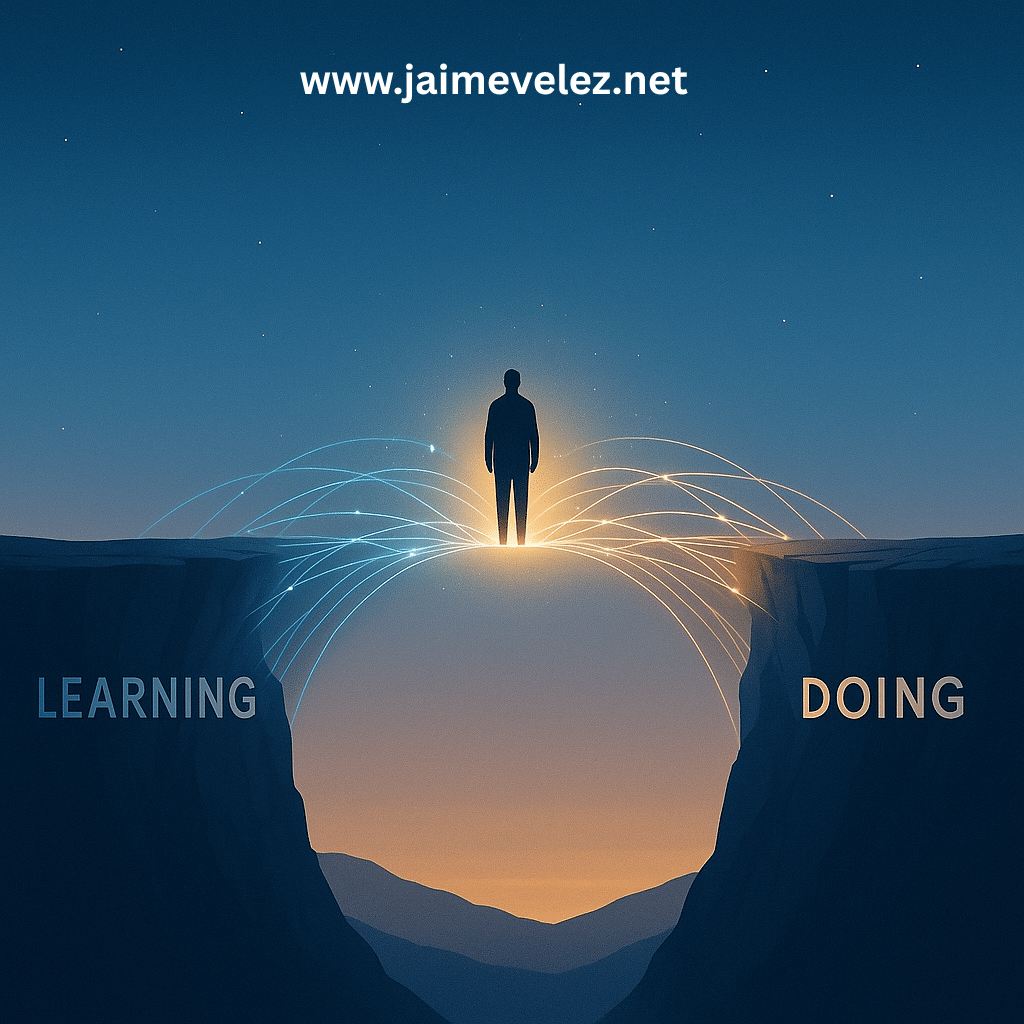
Conclusion: the willingness is still our choice
Let us return to the quote that opened this post.
The capacity to learn is a gift, the ability to learn is a skill, the willingness to learn is a choice.
AI gives us capacity at a scale we have never had.
Tools like ChatGPT give us ability on demand.
The willingness remains a decision of the heart.
The best part of this AI Learning Opportunity is that it honors your agency.
You choose what to pursue. You choose how deep to go. You choose to keep showing up.
I am grateful for the seasons that formed my learning life.
The textbooks and trade magazines.
The A+ class at PC Professor that taught me to teach.
The CBTs and the long SharePoint ride.
The explosion of online courses and YouTube.
The rise of short-form content.
Each season prepared me for this one.
Today we get to learn faster, apply sooner, and serve better.
That is the promise sitting in front of every one of us.
The capacity is there. The ability is ready. The willingness is yours.
Step into this AI Learning Opportunity with discipline, commitment, and an AI partner at your side.
Then teach what you learn, serve the people you love, and build a life that stays true to your values.